
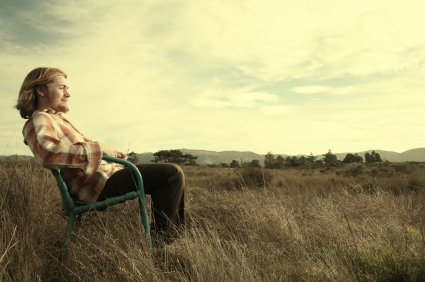
Stress is bad, right? Or is it good? Well, if you talk to the experts, they’ll say both are true. You need some stress to just get out of bed in the morning. And when you drive to work in your car, you need stress to stay alert and respond to what is in front of you. So stress has its place. But what if a high level of stress goes on and on? The doctors tell us that ongoing stress becomes Chronic Stress. Chronic Stress is bad news. It shuts down your immune system so you are susceptible to illness, and it robs you of a good night’s sleep.
Fortunately there is a solution. The key is to learn how to inhibit the Stress Response and enter into the Rest Response. If you want to change your stressful-ways, you need to develop and use new stress relief skills. Learn the techniques to direct your mind and body away from stress and into a restful state. Notice I said, “Learn.” That is because stress is automatic; it comes with the human operating system. However, rest and relaxation need to be learned and practiced — they do not come naturally.
So What is Stress?
Stress is your body’s response to the fear perceived by your mind. There are many fears and stresses we as humans have in common — pain and humiliation, to name a couple. There are also many stressors that are particular to each individual. For example, I think spiders are kind of cool; I like to see them crawl on my arm. I know a lot of people who freak out about this and run away screaming. Big stressor for them! You should become aware of what your own particular stressors are.
When your mind recognizes a stressful situation (spiders or 700 point drop in the Stock Market), it immediately alerts your nervous system and endocrine system. From there, every cell in your body gets on the stress express. Everything nonessential in your body shuts down: immune system, cell regeneration, creative thinking processes, etc. Your heart speeds up, breathing becomes rapid, and blood is diverted from your internal organs. You are ready to fight or flee. All this is good if a deer just jumped in front of your car, or you have to dive for the telephone to call your stockbroker.
When Stress Goes Wrong
When stress continues from one crisis to the next, or happens frequently, then your body does not have a chance to fully recover from the stress. If stress continues for a day, or a number of days, then you can expect serious health problems will follow.
During times of chronic stress, stress hormones are released in your bloodstream. Serotonin in your brain (that is your happy brain hormone) is inhibited by excess cortisol, so you feel depressed more of the time. Chronic Stress adversely affects just about every cell in your body. It can even unravel the strands of your DNA. (Don’t ask, you don’t want to know.) Getting to the point, about 90% of all illnesses today are caused by stress. Not a pretty picture. But don’t let me scare you. All of this can be managed with a good set of Stress Relief Skills.
The Need for Stress Relief
So what do we know so far? We need stress to make it through the day. Chronic stress makes us sick. And rest does not come naturally; you have to learn it. So where is the balance between stress and rest? To maintain balance in your workday, you should regularly cycle between moderate stress and rest. After major stressful encounters your body and mind need to reenter a deeply relaxing state. This cycle between stress and rest may happen every few hours or even several times in one hour during your workday.
Stress followed by rest is the key. Fortunately you do not need to take a long nap or go play a round of golf every time you get stressed. Stress relief really only takes a few minutes and needs to become a habit. Once rest is a habit, you will be able to recover from stress in a few minutes, and you will not enter into Chronic Stress.
Stress Relief Skills
Briefly, here are three Stress Relief Skills you should learn and practice.
1. Relax your muscles: say the word “soft” in your mind, picture things that are soft, and in your mind feel the quality of softness. Place that soft image and feeling in all the tense places of your body: your forehead, neck and shoulders, lower back, hips, legs and feet. Use your imagination to search everywhere in your body that is tense and replace the tension with the feeling and image of “softness.” This will cause your muscles to relax and let go. With practice you can easily relax your whole body in 20 seconds while sitting at your desk. Stress relievers (e.g. stress balls) can also assist you with relaxing your muscles.
2. Pay special attention to relaxing all the muscles you use for breathing. As you breathe, your rib cage should expand front, back, and side to side. A deep natural breath should move your whole torso and easily fill your lungs. Breathe naturally and not too deep. Allow your breath to slow down, keep your throat open, and make a slow smooth transition between each inhalation and exhalation. Do this breathing practice for at least two minutes. Done properly, this type of breathing will shift your Autonomic Nervous System to a relaxation response and increase your Heart Rate Variability — that is a good thing.
3. Give your mind a rest. When your mind is not thinking about the past or future, or not thinking at all, then you will avoid the stress response. Relax your eyes, look straight in front of you and slightly down, and do not move your eyes. In this way notice your entire field of vision, left to right, and top to bottom. Do not focus on any object, rather be conscious of your entire field of vision. You should feel a little “zoned out.” This practice will slow your mind and even allow it to stop briefly. Your mind needs to rest just as your muscles do.
Once you have learned these skills individually, you can practice them all together at once. This makes the process deeply restful and practical, as it should take only a few minutes — less than five. You should practice these skills several times a day and be sure to use them after every stressful experience.





Hi Aaron,
Stress is definitely needed in our life but I believe that our ancestors have a lower stress level than us. In our fast pace society now, I believe stress is just around the corner everywhere and things can get out of hand if nothing is being done to curb it.
Cheers
Vincent
Personal Development Blogger
True! We have become thinking machines. Our ancestors were working machines. They didn’t think a lot like we do now and hence they were much happier and less stressed. Today’s generation is the computer/television generation and we hardly move our limbs. Hence so much stress.
Aaron, great overview. Actually one of the reasons our ancestors dealt with stress better is that they physically responded to the stress. Our stress hormones signal to our body to make changes so we can move faster to avoid the danger, like increasing the amount of blood sugar.
Today, we don’t have that physical exertion to help us use and dispel the residual effects of stress. You can’t sprint from your boss, for example, although you’d like to.
That’s why exercise is such an important stress buster. I cover some of the research linked to this and some additional easy ways to fit exercise into a stressful day here:
http://www.yourhealthyhomebiz.com/get-stress-relief-with-exercise-2-ways-it-can-help
Yes. Very helpful indeed. If I may also suggest something for those who can’t seem to get their mind to stop in the middle of the day. Download a 5 minute guided breathing meditation audio file. Usually it will guide you through all of the recommended steps and you stay focused on the voice and the breathing. I try to do this at least twice a day at the office. So far, it seems to be working miracles. As you say though, it definitely requires patience and practice.
Thanks!
I think you are finding that consistency is important to the practice of stress relief. Doing these exercises several times a day over several days does “work miracles.” You can find relief by doing these practices occasionally, but something more happens when it becomes a regular daily practice.
Well as I type this I have a cold (again!). I highly suspect this relates to stress. I don’t think of myself as someone who stresses much, but I could certainly relax more.
Aaron: thanks for the useful tips. I particularly like your suggestion to say the word “soft” in my mind and picture things that are soft. Hadn’t heard that one before.
Visualization is good, but it is most effective to work at three levels. Saying in your mind the word, “soft” works at a surface level, but is helpful at focusing your mind and energies. Visualizing images of softness work at a much deeper level where the mind and body are integrated. And finally, actually feeling the sensation of softness works at a kinesthetic level (sensations within the body). All three together are more effective then anyone by it’s self.
Great advice!
We all need a little less stress in our lives. I have tried these sort of exercises before and must admit I give in after a couple of days. Any advice to ‘stick with it’?
Thanks.
Andrew
Sticking with it is important. Stress is automatic but rest must be learned and practiced. You literally need to change a habit. This will take about one month. After that time you will have acquired a new skill of stress relief and will likely carry it with you for the rest of your life.
Here are two techniques to help develop your new habit:
1. Find a few objects that will remind you of the Stress Relief Skills. These reminders could be a picture cut from a magazine, a few words on a Post-it note, or any small object. Make a commitment to yourself that you will briefly practice these skills each time you see one of these reminders. Every few days move these reminders to a new location — from the bathroom to the kitchen, or from the left side of your desk to the right. Moving the reminders keeps them fresh and effective.
2. Incorporat these relaxation exercises in your daily routine. For example, when you sit at the computer in the morning, practice your stress relief exercises during the time that the computer is “booting up”. Or, take one or two minutes before each meal. You could also sit in your car for two minutes to relax after you arrive at home. See what I mean, naturally incorporate it into your daily routine.
Stay in touch Andrew, let me know how it goes.
Aaron,
That’s great – thanks.
I shall try them. I like the the ‘relax’ while the PC boots up!
Andrew
Those are helpful tips and a good reminder to relax and not let life get the best of us.
I think modern societies have foisted stress upon us because we make things which are unimportant seem so very necessary.
Life is definitely too short to worry ourselves to death.
The Institute of HeartMath research shows that the ’stress’ hormone, cortisol, is released from the same glands as the ‘feel good’ hormone, DHEA.
Being stressed is normal but not necessarily natural. We have been trained to think that it is normal to have negative feelings about the challenges we face in life, but feelings of gratitude and appreciation are a more natural state of being. The well-being of the mind, body and spirit is profoundly enhanced when we are in an optimistic state of mind.
Good advice…. I like the fact you stayed away from some of that over the top New Age “The Power of Now” stuff. That’s a bit over the top.
IsHungLikeAHorse.com – webmail for the well endowed and proud.
I find listening to autogenic relaxation techniques to be very beneficial in getting relaxed and kicking out a bit of stress.
There’s a fellow here in Toronto called Eli Bay who used to have a show about relaxation techniques on TVO (kinda like Canadian PBS) — I ended up buying his relaxation exercises on tape at the time, and have been hooked on these types of things ever since. Even went so far as to re-purchase them on CD recently. Great stuff for taking a bit of time out to just “let go”.
you could also just smoke some pot….. makes these other stress “relief” ideas pale in comparison to actually forgetting you’re stressed, no?
Great article! Very indepth on the workings of stress. The body also becomes numb to prolonged stress. Then one day it’s gone, and you wonder how you put up with it for so long.
Best regards,
Dan Malone
Great lil article! Many people don’t realize how little time it takes during a busy work day to relax their minds and body. Most people wake up and jump into the rat race feet first with java in hand not realizing that minor adjustments could make their lives much better.
Wow, in these pressing times I am willing to try anything.
Jiff
http://www.anonymity.cz.tc
As someone who has suffered from an anxiety disorder, I am justified in saying that your ‘ultimate guide to stress relief’ is useless. You fail to recognize that unhealthy anxiety is rooted in cognition, whereby distortions trigger negative emotions beyond a person’s threshold. Cognitive behavioral therapy trumps muscle relaxation and breathing. However, most people believe in the latter because the intensity and frequency of their stress is much less than anyone with a disorder.
This article is rhetorical and non-scientific and does not reflect the opinion of someone qualified to discuss this issue. To think that an anxiety problem could be treated in this way is to grossly trivialize the complexity and difficulty of dealing with chronic stress and this contributes to the stigma of mental illness
I understand that you speak with some authority about anxiety disorder and that you have found cognitive behavior therapy to be an effective treatment. However, I would like to bring to your attention that this article is not about anxiety or anxiety disorder; it is about stress and chronic stress. Also, all the information and recommendations in this article are based on sound scientific practices and principles.
Thumbs up to the idea of giving the mind a rest. I find that I need to take frequent breaks from my laptop. If I am oblivious to the intense focus I have while working, my eyes do get very tired. It is best to take a break before that happens!
Right you are about taking a break from the computer. When you focus on the computer screen you are using muscles to focus short distance. Frequently you should look away from the screen at something far away to relax your eyes. Focusing at a distance will give your eyes a rest. It uses the muscles in your eye differently.
I also encountered a similar problem Evelyn. I usually spent 8-10 hours everyday working on my laptop and it’s now giving me occasional headaches. I consulted my doctor for it and she told me that it might be stress related. From then, I tried researching about stress relies skills that might help me with this. In addition, I also engaged someone to assist me with the stuff I do. I decided to hire a virtual assistant. It’s really a big relief as I now have extra time to rest my mind. You should give it a try.
These were great advice.
But as a student with stress from school and day to day problems,
How do I stay committed to these type of exercises?
Take a look at my reply to the post from greatmanagement above. I think the suggestions outlined there should help. Feel free to send mean e-mail to me and we can schedule a time to talk by phone. I am sure I can help.
Hi that’s a great post.Enjoyed reading it. Here’s a website which can help you to relief stress the hassle-free way.Thought that i might share it here with you. It’s at http://www.howtorelievestress.org
Thanks for the great insight. I found as I was reading your tips I started to employee them allowing my body to relax. It’s amazing how stressed or tight our muscels can get while simply reading.
I find that learning to recognize a stress response is very important. The smaller the time gap between the initial physical stress response and our relaxation, the more effective the relaxation will be at toning down the body’s response to the stressor….
Also, a little exercise right after the stressor has gone helps a lot. The body dumps chemicals and hormones into the bloodstream to help us fight or flee from the stressors… if those chemicals hang around too long …or if we try to cover them up with more chemicals, ‘james’ :) … they start to harm us (hence all the negative health consequences of stress!)
Great post!
– James T.
P.S.
http://www.christian-life-coaching.org/stress-management.html
for more info on stress :)
Thanks for the post. It was very informative. I think most people deal with stress and different people deal with it in different ways. I tend to go for a run when I’m stressed, but you have some good ideas. I work for a staffing company, Hollister (www.hollisterstaff.com/?=451) and my colleagues and I were recently talking about how we each deal with stress. We seemed to all agree that a great way to deal with stress is talking with a friend over dinner!
Thanks for your contribution to my Take Charge of Your Health Care Carnival. My readers will appreciate these stress reduction techniques.
Thank you for submitting this excellent article to the Living by Design blog carnival. Out of 136 submissions your article was one of only 7 featured. I appreciate your contribution.
Great ideas and advise. Thank you.
thanks, that was helpful :)
Thank you for your valued contribution to our last blog carnival of 2008.
Stress relief is an integral part into achieving success in life.
This day and age stress is everywhere but this article has provided great tips to help us manage stress. Good stuff to learn for a healthier happier life.
Nice! That is simple yet effective stress relief.
Thanks for making stress relief one of your topics. Stress can be good and bad, but most times it’s bad. I hope your readers will add another way to relief stress to their list of techniques, and that’s aromatherapy. It’s underutilized, but very effective. Thank You!
Excellent tips for coping with stress. I would really like to thank you for sharing them. These tips are really helpful for those who feel over stressed in life. Keep up the good work.
I so love this topic! I so believe we need to be careful in getting into the scary territoy of chronic stress.
Breathe, that”s my suggestion. Al ot of good can be done by taking some good DEEP breathes.
I think the biggest issue is that stress is misunderstood.
Stress is not something that needs fixing or developing new habits. It’s simply a warning signal that your life is a little off-course. Get back on course and the stress will go.
Another vote for your post. Stress can really get out of hand. Knowing how to relieve your stress is extremely important. Another technique I’d like to mention is Aromatherapy. It is a very effective, but underutilized stress management technique. Thanks, great blog.
Thanks for the stress-relief advice.
I’ve found personally that if I tie stress-relief to spiritual sustenance, I feel joyful and calm on two fronts — the physical well-being front (nice) and the ‘conscious awareness’ front.
So, I never see stress as separate from inner joy/spiritual cultivation. The more times in the day we can stop and remember, the better.
Jillian
http://www.jillianjdavis.com
Be Adventurous, Wake Up to Work You Love
Nice post you wrote here…and really useful advice
Thanks,Very helpful,I feel stressed when I can’t do well in my job.
Sometimes I can’t fall a sleep in night.Thanks for your advice.
Great piece! The soft mind one is especially helpful. I tried it out just after I read that paragraph and noticed a slight lull over my body. Can’t wait to practice this one.
For me, I find, like everything else, there’s a stress threshold. Once I cross it, everything just builds up, snowballing and I just loose it. The key, and what your stress tips will be so helpful in doing, is keeping the stress on the left side of that threshold.
Thanks Aaron, Great stuff.
Cheers!
Excellent article ! Very informative
Excellent article, very informative. Your three stress relief tips are definitely worth while doing, however with so many methods available, the list is endless on how you can relieve stress. I hope as many as possibile benefits from your methods.
Diane Shepard
How To Relieve Stress
What a great article! The fact that your tips do not require a great deal of time or a special place to practice them is especially appreciated. Not to mention the fact that they’re not complicated!
Thanks so much for all of this – I’m definitely going to be putting a few of these to good use – especially at work!
Virtually Yours,
Anne-Marie
Love these stress relief tips. Implementing them on a daily basis is a whole different story though, and something many people should begin making a habit of. Great share.
For me, stress has been bad as well as good because most of the time when I’ve stress from work I tend to my job more effectively but when this stress crosses its limit it results to depression.
Very good article on stress management.
Thanks for timely help!